Category archive

Data

Historic data, back-testing and tooling

16 stories loaded

Macro
ForexLive · 2 weeks ago

investingLive Americas market news wrap: Big beat for non-farm payrolls

US August payrolls delivered a significant 162K beat (vs. +56K expected), reversing divergence with Canada's -41.7K miss. The dollar initially spiked ~35 pips post-NFP but retraced sharply as traders reassessed Fed policy—implied hike odds jumped from 49% to 58%, lifting short-dated yields 4 bps despite Fed speakers signaling jobs data wouldn't drive near-term decisions. USD/JPY saw heavy intervention with a 200+ pip swing; USD/CAD peaked at 1.3871 before giving back 35 pips as broad dollar momentum fizzled.
Crypto
CoinDesk · 2 weeks ago

Live updates: Bitcoin ETFs take $731 million, their biggest day since January

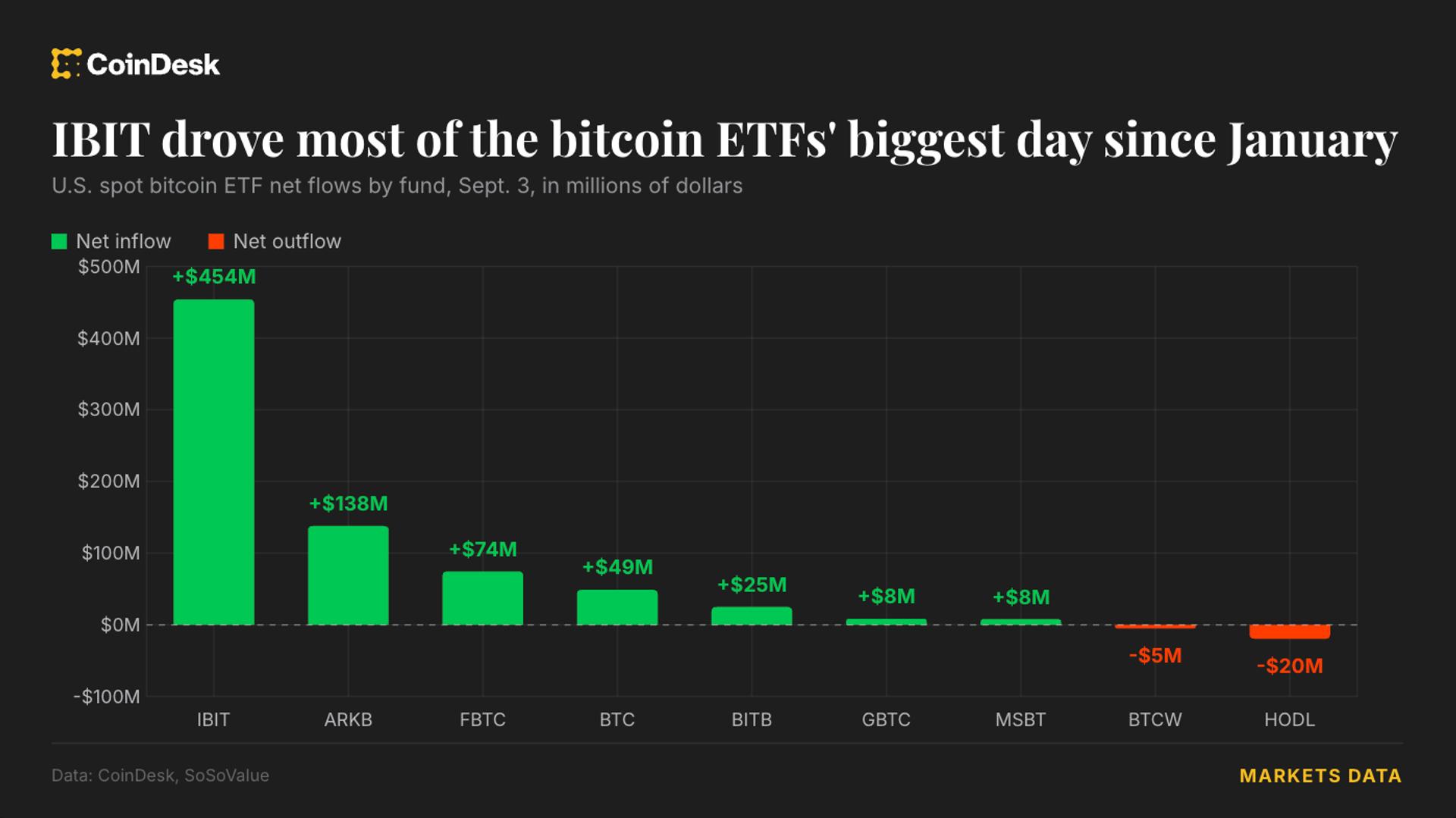
Spot bitcoin ETFs posted their largest single-day inflow since January, with $731M in net inflows and all funds rising ~6%. BlackRock's IBIT accounted for over half the inflows, pushing total complex assets to $103B for the first time. This marks a significant shift in institutional flows and suggests renewed retail or macro appetite for bitcoin exposure via regulated vehicles.

Macro
ForexLive · 3 weeks ago

Economic and event calendar in Asia 28 August 2026 - Japan inflation data (Tokyo)

Japan's July Tokyo CPI core inflation beat expectations at 1.9% YoY (vs 1.7% forecast), with the BoJ's preferred core-core measure hitting 2.0%—the fastest pace in four months. Broader "naphtha-flation" driven by weak yen and elevated crude costs is hardening market bets on a September BoJ hike to 1.25%, with pricing rising from ~65% to nearly 80% odds. This sets up August Tokyo data as a leading indicator ahead of nationwide CPI in three weeks, with implications for JPY strength and regional rate expectations.

Macro
ForexLive · 3 weeks ago

Dallas Fed Trimmed Mean +2.2% versus 1.5% last month

The Dallas Fed's trimmed mean PCE—a measure designed to filter out one-off price moves—jumped to 2.2% year-over-year from 1.5% last month, moving back above the 2% level. This metric strips 55% of weighted PCE components (24% of lowest movers, 31% of highest) to reveal underlying inflation momentum, and is closely watched by Fed officials as a predictor of persistent inflation. The breadth data shows 64.6% of categories rising with 31.5% up at least 5%, suggesting broad-based price pressure rather than isolated spikes—a material shift in the inflation composition that could influence rate-path expectations.

Macro
ZeroHedge · last month

WSJ Catches Up, Discovers AI's Off-Balance Sheet Liabilities Are $3 Trillion And Growing $1.2 Trillion Per Quarter

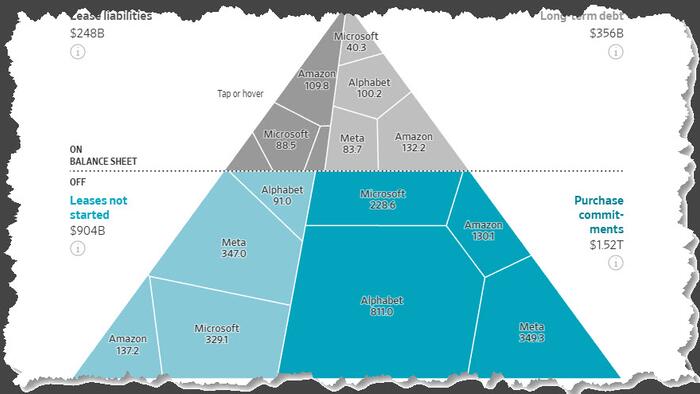
Major tech companies (Google, Meta, Microsoft, Amazon, Oracle, Nvidia, etc.) have committed to ~$3 trillion in AI infrastructure spending hidden off their balance sheets through special-purpose vehicles, uncommenced leases, and long-term purchase agreements—roughly triple their reported capex and growing at $1.2 trillion per quarter. The accounting is legal but masks severe timing mismatches: capex is being committed ahead of revenue and free cash flow to support it, with depreciation expenses still deferred; when those hit, cumulative depreciation could exceed $520 billion over three years and push margins sharply lower unless sales accelerate proportionally. The concentration risk is acute—a handful of large, long-duration contracts and supplier relationships (especially with Nvidia) create cascading counterparty exposure, and if Chinese open-weight models erode token prices and hyperscaler profitability, companies with negative free cash flow will struggle to service obligations they cannot cancel.

Macro
ZeroHedge · last month

Key Events This Week: FOMC Minutes, PMIs, Industrial Data; WalMart And Home Depot Earnings

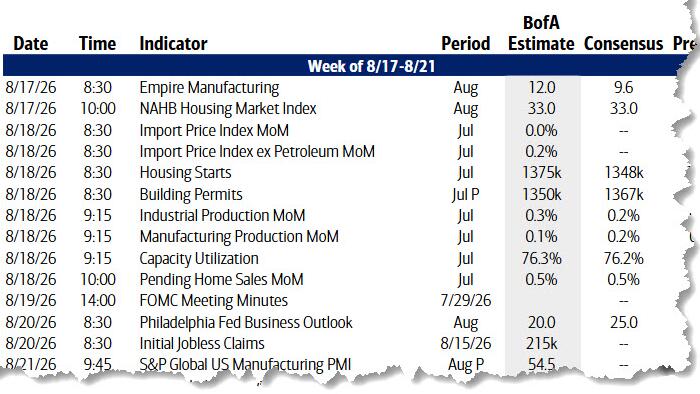
Bond markets face pressure this week from the July FOMC minutes (Wednesday), flash August PMIs (Friday), and a potentially expensive 20yr Treasury auction, with the 2s10s curve having steepened 20bps since late July. Core PCE inflation remains sticky at +3.2% YoY despite recent tame CPI/PPI prints, and the Fed's three July dissenters signaled hike readiness if inflation doesn't improve. Key equity earnings from Walmart, Home Depot, and Target will gauge US consumer health, while China's weak domestic demand and flat YTD equity performance contrast sharply with US and European gains.

Macro
ZeroHedge · last month

Private Credit's Problems Just Got Real

Nonperforming loans at major private credit funds (Ares, Golub Capital, Blue Owl, Blackstone) have reached five-year highs, with Blue Owl's nonaccruals at 2.8% in Q2—exceeding even 2023 stress levels. Watchlists of troubled borrowers are simultaneously expanding at their highest levels since 2022–2023, signaling deteriorating credit quality beneath the surface. This compounds an existing liquidity crisis: billions in redemption requests have forced funds to cap withdrawals, creating a feedback loop where rising defaults, declining returns (~7% vs. historical 10%+), and persistent redemption pressure could force asset sales at stressed valuations and starve leveraged borrowers of refinancing capital.

Macro
ForexLive · last month

Goldman chief economist Hatzius expects a benign July US CPI print

Goldman Sachs chief economist Jan Hatzius expects July CPI to print around 0.05% headline and 0.19% core—both in line with or slightly below consensus—reinforcing June's softer trend and easing near-term Fed pressure into September. The more material signal: Goldman cut its underlying monthly payrolls trend from 75,000 to just 5,000, reflecting rapid labour-market deterioration beneath headline noise. Hatzius argues inflation remains winnable without a hike this year, as tariff pass-through fades (0.7pp drag expected to trend to zero over 6–12 months) and rent/wage inflation cool naturally—though he sidesteps the credibility risk of Warsh's possible PCE gauge pivot.

Crypto
CoinDesk · last month

Bitcoin investors pour $853 million into spot ETFs. BlackRock’s IBIT claims the bulk

U.S. bitcoin spot ETFs pulled in $853.54 million in net inflows for the week ended August 7—the largest weekly total since mid-April—with BlackRock's IBIT capturing $693 million of the total. The inflow surge suggests institutional re-entry after heavy selling earlier in 2025, supported by a cooling jobs report that reduces Fed rate-hike expectations; however, year-to-date the ETFs remain approximately $4.5 billion in net outflows, indicating sustained inflows will be needed to support a meaningful price advance. Bitcoin is trading around $65,100, with the upcoming July CPI data (Aug. 12) positioned as a key variable for both ETF flows and price trajectory.

Macro
CNBC — Markets · last month

The July jobs numbers are due out Friday. Here's what to expect

The July jobs report due Friday is expected to show weak payroll growth (+83K) and a flat 4.2% jobless rate, but the real story lies in labor force participation—which hit a 50-year low in June outside the pandemic era—and wage dynamics that will inform Fed rate-hike deliberations. Economists are split: some see the participation decline as a temporary seasonal anomaly, while others (notably Citigroup) expect the unemployment rate to rise above 4.5% within months, potentially shifting Fed policy from inflation-focused tightening to rate cuts. This data point is critical for volatility in fixed-income and FX markets, as any surprise on participation or wage growth could reshape rate-cut expectations.

Macro
ForexLive · last month

US July ISM services index 54.1 vs 54.5 expected

US July ISM services came in at 54.1, slightly below the 54.5 forecast, though business activity (59.1) and new orders (57.2) beat expectations. The critical weakness was employment, which collapsed to 47.4 from 51.2—a significant drop that signals labor market softening despite elevated prices paid (70.3 vs 67.7 prior). This contradictory backdrop—softer jobs alongside persistent inflation—raises stakes for Friday's nonfarm payrolls and suggests downside risks for equities and duration.

Macro
ZeroHedge · 2 months ago

"Hiring Patterns Are Changing": ADP Reports Weakest Job Gains In 6 Months, But...

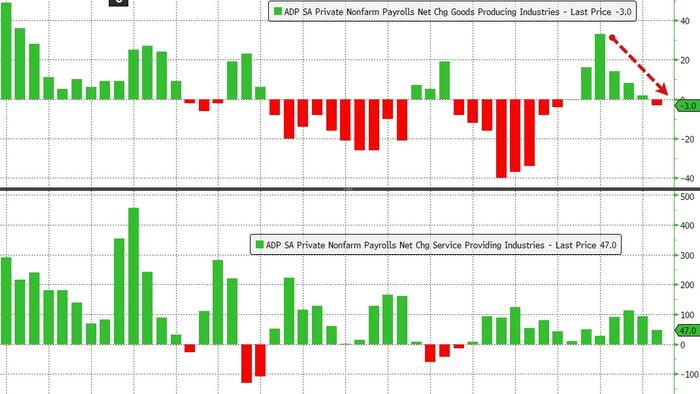
ADP's private payroll report showed a significant slowdown to 44k jobs added in July—well below the 65k consensus and the weakest print since January—signaling employers are pulling back amid shifting economic conditions. However, wage growth for job-switchers hit its strongest pace in nearly a year, indicating pockets of labor supply tightness persist despite the headline cooling. The mixed signal—weaker hiring volume but stronger wage dynamics—sets up Friday's official BLS payrolls report as a crucial test of whether the labor market is truly softening or consolidating, with direct implications for the Fed's inflation-fighting posture.

Macro
ForexLive · 2 months ago

US ISM Manufacturing PMI for July 55.6 versus 54.0 estimate

July ISM Manufacturing PMI expanded to 55.6 from 53.3, the strongest in over four years and above the 54.0 consensus, driven by broad-based gains in production (58.5), new orders (56.7), and employment (52.8 vs. 49.7). The report signals manufacturing momentum is accelerating with rising backlogs and low customer inventories suggesting near-term demand strength, though elevated prices paid (71.1) and supply-chain bottlenecks signal persistent inflationary pressure and potential hawkish implications for Fed policy.

Macro
ZeroHedge · 2 months ago

Key Events This Week: Jobs, ISMs, Fed Speakers And More Earnings On Deck

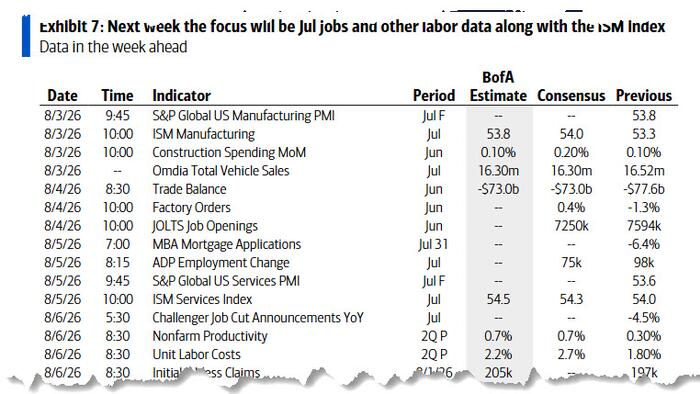
This week is data-heavy across macro calendars: the US will release JOLTS, ADP employment, and Friday's crucial July jobs report (consensus +85k nonfarm, +83k private), with risks skewed toward a 4.3% unemployment rate. Fed speakers (Cook, Schmid, Musalem, Barkin) will be closely monitored for rate-path signals following three dissents favoring a hike last week. Globally, investors will watch Swiss/Swedish inflation, German activity data, Chinese PMI and trade figures, and Japanese wage momentum. Concurrent heavy earnings from Palantir, AMD, Disney, Uber, and others.

Crypto
CoinDesk · 2 months ago

How bitcoin cold wallets lost $70 million in an attack that never touched the devices

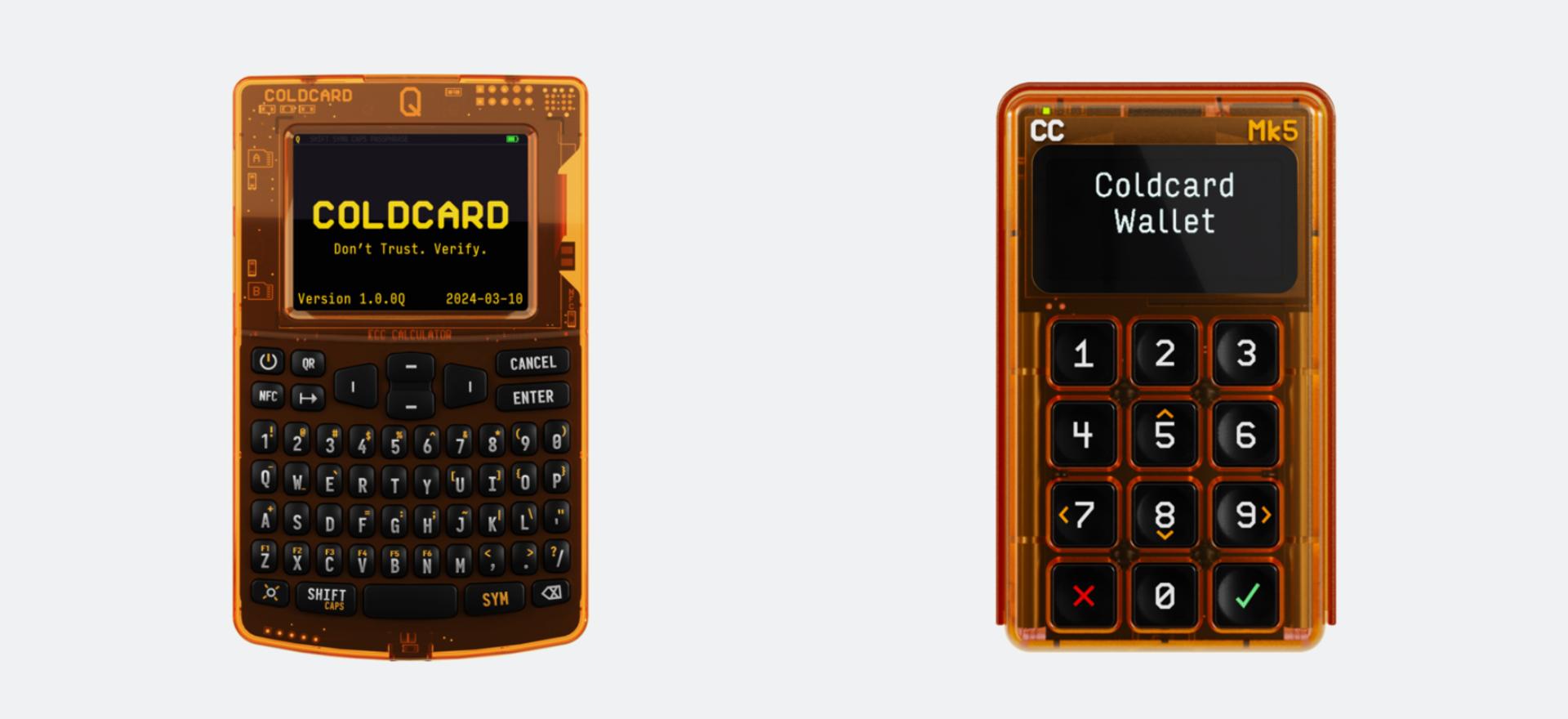
A firmware vulnerability in Coldcard hardware wallets (Mk2–Mk5 models) allowed attackers to computationally enumerate seed phrases offline by exploiting weak randomness generation tied to device serial numbers and clock values, rather than a dedicated hardware RNG. Over 1,082 BTC (~$70M) were drained from 1,196 wallets in 41 minutes on July 30; the attacker derived private keys entirely on their own hardware and checked them against the public blockchain, never requiring network access to the victims' devices. The exploit is significant because it breaks the core security assumption of cold storage—that an air-gapped device is unreachable—by attacking the generation mechanism itself rather than the device's connectivity.

Crypto
CoinDesk · 2 months ago

Major bitcoin wallet flaw drains $38 million worth of BTC in 25-minute sweep

A randomness generation flaw in Coldcard firmware 4.0.0 (March 2021) caused the wallet to use predictable, non-secret chip data instead of its hardware random number generator when creating seed phrases. An attacker exploited this to derive private keys and sweep approximately 594 BTC (~$38M) from around 500 single-signature wallets in under 30 minutes on Friday. The vulnerability affects Mk3 devices running firmware 4.0.1 or later; Mk4, Q, and Mk5 models appear unaffected. The stolen coins have largely been consolidated into a single address and remain stationary, and Bitcoin's price showed little reaction to the incident.