
TechMajor bitcoin wallet flaw drains $38 million worth of BTC in 25-minute sweepA hardware wallet randomness bug turned “impossible to guess” seeds into guessable ones, and $38 million is already gone.By Shaurya MalwaUpdated Jul 31, 2026, 11:13 a.m.
Published Jul 31, 2026, 5:12 a.m. 2 min readMake preferred on ShareShare this articleCopy linkX iconX (Twitter)LinkedInFacebookEmailMake preferred on Coldcard flaw lets attacker drain $38 million in bitcoin from old wallets.
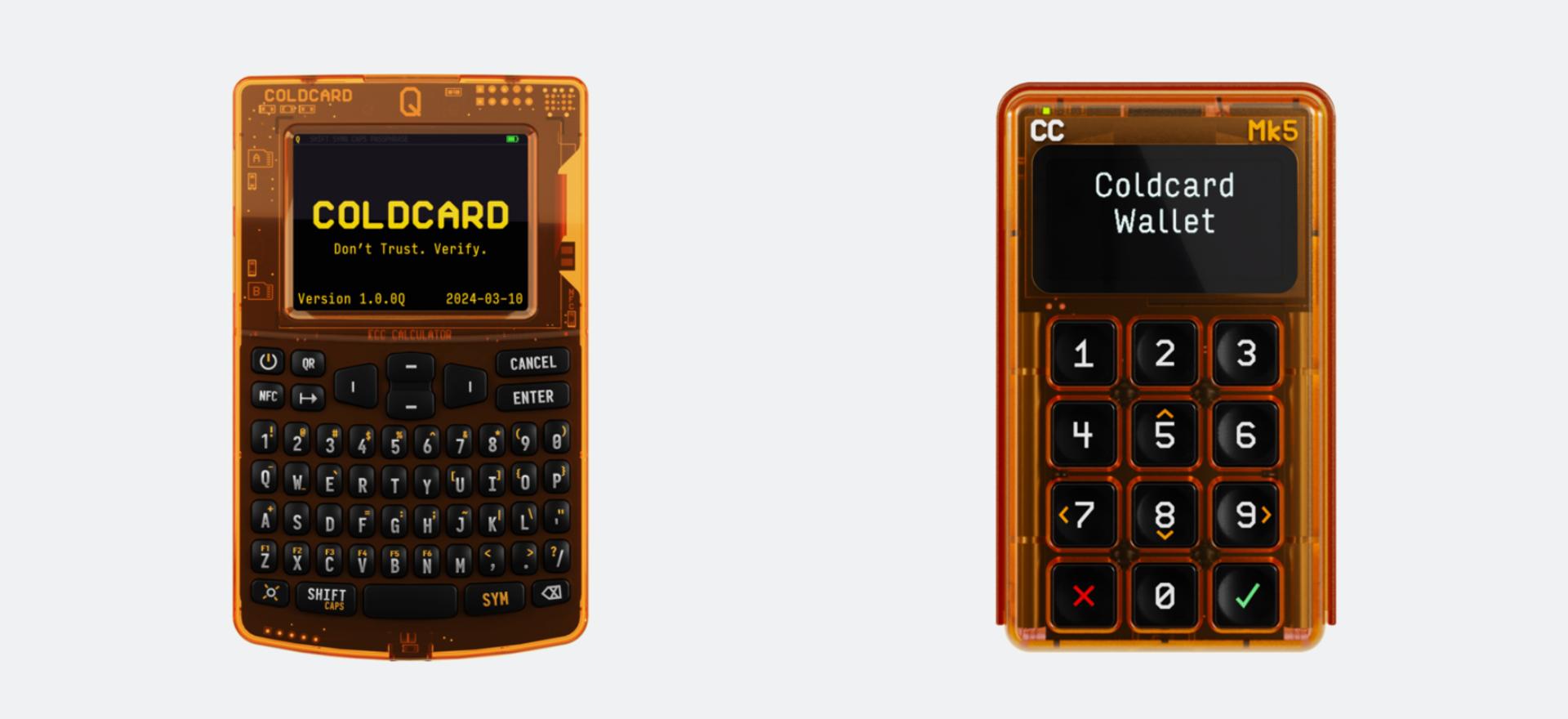
(Coinkite)SummaryShowAn attacker exploited a flaw in how some Coldcard hardware wallets generated keys to steal roughly 594 bitcoin, worth about $38 million, from around 500 single-signature wallets in under 30 minutes.The vulnerability, introduced in Coldcard firmware 4.0.
0 in March 2021, caused devices to skip their hardware randomness generator and fall back to predictable software-based key generation seeded by nonsecret chip data.Coinkite has warned users who created seeds on Mk3 devices running firmware 4.0.
1 or later, while stressing that Mk4, Q and Mk5 appear unaffected so far, and the theft has had little visible impact on bitcoin’s market price.Roughly 594 bitcoin, worth about $38 million, was swept out of around 500 separate wallets between 01:31 and 01:56 UTC on Friday in an attack traced to a flaw in how Coldcard hardware wallets generated their keys.The theft moved 1,324 chunks of bitcoin across 500 transactions inside a three-block window, with 562 BTC then consolidated into a single address that has not moved.
Every drained wallet was single-signature and each held more than 0.15 BTC. Many had been dormant for years and the coins spanned 2021 to 2026, matching the flaw's age almost exactly.
Coldcard is a hardware wallet built by Canadian firm Coinkite, a small standalone device that stores bitcoin keys offline, away from internet-connected computers. Mk2, Mk3, Mk4, Q and Mk5 are successive generations of that product, released over several years the way a phone maker ships numbered models.Exposure depends on the firmware the device was running at the moment the wallet was first created, not on when the hardware was bought.
A wallet's seed, the secret phrase controlling the funds, is meant to be drawn at random from a pool so vast that guessing is hopeless. Coldcard's firmware was not doing that. According to a report published by Block's Bitcoin engineering and security teams, a build setting told the device to skip its own hardware randomness generator, and a check in a supporting library tested only whether that setting existed rather than whether it was switched on.
Key generation quietly fell through to a basic software substitute seeded from the chip's serial number and clock registers.None of those are secrets. The serial number is fixed factory metadata, and the clock values are timing state an attacker can narrow down or measure on a device of their own.
Block traced the change to a commit dated March 1, 2021, shipped in firmware 4.0.0 that month.
As such, Coinkite warned users who generated a seed on an Mk3 running version 4.0.1 or later, and said "Mk4, Q and Mk5 are not affected based on our early analysis.
" Block said it disclosed its findings to Coinkite, whose team acknowledged them. Both companies describe their analyses as preliminary, and Block said it published without full testing to confirm exploitability because exploitation was already under way.The exposure runs past wallet seeds.
The same generator produced Coldcard's paper wallet private keys, where the output becomes the key directly with no further derivation, along with seed-splitting masks, device cloning keys and Key Teleport transfers.Bitcon traded above $64,000 in early Asian hours, with widespread drain appearing to have little impact on the market.Latest Crypto News 1Coldcard's $38 million (so far) exploit shakes faith in self-custody, may push investors to ETFsil y a 25 minutes2Quantum computing nears commercial breakthrough, IBM CEO saysil y a 1 heure3Crypto faces 3 barriers to next bull run, STS Digital CEO saysil y a 2 heures4Circle secures New York trust charter as crypto regulatory push acceleratesil y a 3 heures5Coinbase's weak quarter leaves Wall Street split on timing of a recoveryil y a 4 heures6RWA perps will outpace tokenizationil y a 4 heures7Dubai-based crypto exchange tied to $4 billion Iran sanctioned-evasion networkil y a 5 heures8World Cup bets smash records as prediction markets hit $20 billion in volumeil y a 5 heures9U.
S. sanctions Iran-linked bitcoin insurance scheme for Strait of Hormuz shipsil y a 5 heures10Traders brace for an August crypto pull-back as protection against $60,000 bitcoin dip becomes top tradeil y a 5 heuresLatest Research The Evolution of the Crypto CEX Landscape: A Case Study on BinanceThe Evolution of the Crypto CEX Landscape: A Case Study on BinanceBinance remains crypto’s leading exchange, expanding from spot and derivatives into RWAs, payments, savings, yield, and broader financial services.By CoinDesk ResearchJun 29, 2026Commissioned byBinanceBinance remains crypto’s leading exchange, expanding from spot and derivatives into RWAs, payments, savings, yield, and broader financial services.
Why it matters:Binance remains crypto’s leading exchange, expanding from spot and derivatives into RWAs, payments, savings, yield, and broader financial services.View Full ReportMore From Tech The economics behind Aave proposal to ditch 6 chains that earn loose change in revenueEthereum enters its second decade after a year of upheaval at the foundationLive updates: Bitcoin holds above $64,000 as Nasdaq surges on AI trade comeback