
Category archive

Momentum

Momentum and relative-strength plays

20 stories loaded

Commodities
ZeroHedge · 5 days ago

$6 Diesel Flashes 2008 Warning As Energy Shock, AI Slowdown Fears Fuel Perfect Storm

Diesel prices have surged to $6.23/gallon nationally and $9.99 at California pumps, driven by geopolitical disruptions to Russian and Middle Eastern refining capacity. Bloomberg's Mike McGlone flagged the parallel to 2008's gasoline spike, warning that elevated equity valuations amplify recession risk if energy shocks persist. Sustained diesel elevation threatens stagflation—higher input costs crush margins for industrials while demand destruction looms, with Citi expecting headwinds through mid-2027.


Indices
ZeroHedge · 5 days ago

Futures Slide As Tech Tumbles On Fears Of AI Slowdown, Oil Jumps

US equity futures opened sharply lower after AI industry executives—including Anthropic's Dario Amodei and OpenAI's Sam Altman—called for a measured pace in advanced model development over the weekend, sparking rotation out of chipmakers (semis -4.7% premarket) and AI-exposed Mag 7 names (NVDA -3.2%, TSLA -2.1%, META -1.2%). Simultaneously, Brent crude jumped above $108/bbl (+2.8%) following Saudi Arabia's precautionary shutdown of its East-West pipeline after recent attacks and postponement of Iran-Gulf talks on Strait of Hormuz shipping protocols, offsetting what would have been a stronger tech rally. The two-factor selloff—AI moderation fears combined with geopolitical oil supply risk—has compressed the risk asset bid while bond yields remain range-bound ahead of Wednesday's Fed decision (87% probability of 25bp hike priced in).

Commodities
ZeroHedge · 5 days ago

EU NatGas Hits Highest Since 2022 As Low Storage Sets Stage For Winter Cold-Snap Price Shock

Dutch TTF natural gas futures jumped 5.3% to 83.67 euros per megawatt-hour, the highest since the Russia-Ukraine conflict outbreak in December 2022. Storage levels are critically low at 68% capacity against a 15-year average of 85% for this time of year, while LNG arrivals have slowed and geopolitical risks (Saudi pipeline offline, Strait of Hormuz/Red Sea tensions) threaten further supply disruption. Analysts warn the combination of depleted inventories and approaching winter creates a "fragile balance"—one cold snap or additional supply shock could trigger sharp volatility as Europe heads into the heating season structurally undersupplied.

Macro
ZeroHedge · last week

This Time Is Different? Earnings & Price Break 90-Year Trends

The S&P 500 fell modestly to 7,666 this week, but breadth collapsed—small caps down 2.38%, equal-weight index down 1.87%, while cap-weighted barely budged. A crude-oil spike (up ~9%) pushed 10-year yields near 5%, triggering selling in rate-sensitive names. Inflation data (CPI 3.4%, PPI 5.4%) was hot enough to spook bonds but not justify a Fed hike. The real story: corporate earnings have broken above a 90-year trend and now sit at peak levels (S&P at 25.6x trailing, Shiller CAPE at 96th percentile), while positioning remains bearish and momentum is rolling over. The setup is primed for either a pain-trade squeeze higher or a sharp repricing if earnings revert to trend.

Commodities
ZeroHedge · last week

WTI Tops $101 As Strategic Petroleum Reserve Nears Record Low

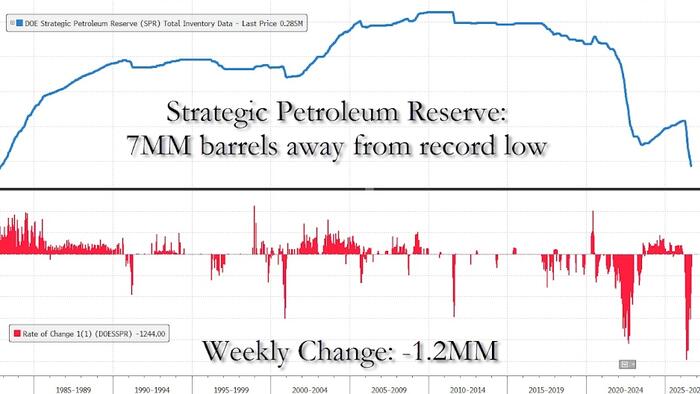
WTI crude broke above $101 this morning following Middle East supply pressures—Saudi production at 36-year lows, Houthi attacks on Red Sea shipping, and SPR drawdowns now within 7mm barrels of record lows. API crude inventory drew only 2.6mm barrels (smallest in weeks) while refined products built, and US gasoline demand declined week-on-week despite elevated $40/bbl crack spreads; the article frames this as a supply-constrained regime where $100 is now a floor, with implications for inflation and policy response.

Macro
ECB — Press · last week

Monetary policy decisions

The ECB hiked its main refinancing rate by 25 basis points to 2.65%, citing persistent inflation above target driven by Middle East geopolitical tensions. Staff projections show headline inflation averaging 3.0% in 2026 (2.5% core) with upward revisions for 2027–2028, while growth forecasts were modestly raised. The Governing Council signaled a data-dependent approach with no pre-commitment to a rate path, keeping the Transmission Protection Instrument in reserve to manage potential transmission risks.

Forex
ZeroHedge · last week

"I Am The House Now": Bessent Goes Full Judge Dredd On Yen Bears

US Treasury Secretary Bessent made explicit public statements challenging yen short positioning, claiming informational advantage over Japanese policymakers and the BOJ. The remarks triggered a notable shift in hedge-fund positioning from dollar-long (yen-short) to yen-bullish trades, with options activity concentrating on dollar-yen targets of 150–152 by year-end, contrasting sharply with Japanese retail investors' ¥3.61 trillion net short-yen bets. Analysts flag carry-trade unwind risks and note that while Bessent's jawboning has moved sentiment, the yen objectively continues to appreciate as BOJ tightening priced in—a dynamic with potential spillover effects on US equity leverage.

Commodities
ZeroHedge · 2 weeks ago

The Copper Chart Causing Alarm

Copper futures on the LME are approaching record highs (~$14,450/t in late August) after 10 consecutive weeks of gains, driven by real physical tightness. Global mine production fell 1.1% in H1 2026, with major producers Codelco and Freeport-McMoRan posting double-digit output declines; Chile alone expects a 2.6% annual drop due to severe weather shutting down Antofagasta and Lundin operations. US buyers are front-running potential tariffs with record seaborne imports (200k tons in July), while demand from EV, grid, and AI data center buildouts continues to accelerate—creating a structural supply-demand imbalance that may persist even if tariffs are phased in.

Equities
ZeroHedge · 2 weeks ago

FICO Crashes As Trump Housing Chief Pulte Cracks Mortgage-Score Monopoly

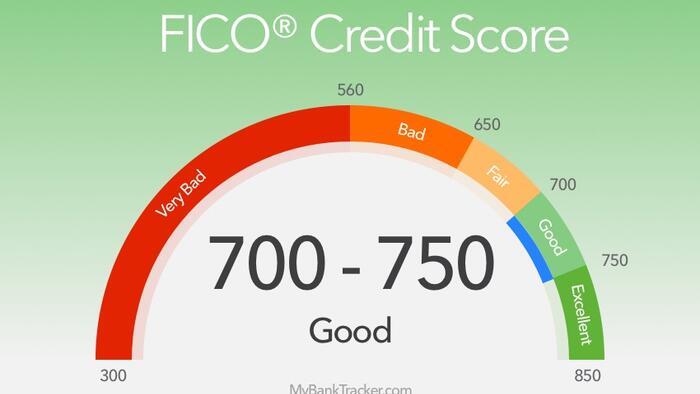
Federal Housing Finance Agency Director Bill Pulte announced immediate approval for all lenders to use VantageScore as a competing credit-scoring model, and signaled serious consideration of bi-merge credit reporting and structural reforms in the mortgage industry. Fair Isaac (FICO) fell as much as 21%, while Equifax and TransUnion each dropped ~11%, as the market repriced exposure to potential revenue loss and pricing pressure in mortgage credit reporting. The move directly targets FICO's 75%+ market dominance and threatens 10–35% of mortgage exposure across these three data-processing firms depending on implementation scope.

Commodities
ZeroHedge · 2 weeks ago

Iranian Tanker Reportedly Hit By Missiles Near Kharg Island

US Central Command confirmed strikes on three Iranian crude oil tankers near Kharg Island and the Gulf of Oman in response to Iranian ballistic missile attacks on US Navy vessels. Kharg Island handles roughly 90% of Iran's crude exports; loadings have already collapsed from 1.5–2 million barrels per day to 220,000–255,000 bpd under a US naval blockade. The escalation removes a major supply source and widens the gap between reported tanker flows (10 mbd) and actual Gulf exports (15–16 mbd), signaling further crude market tightness and upside risk to Brent pricing.

Crypto
CoinDesk · 2 weeks ago

Live updates: Bitcoin ETFs take $731 million, their biggest day since January

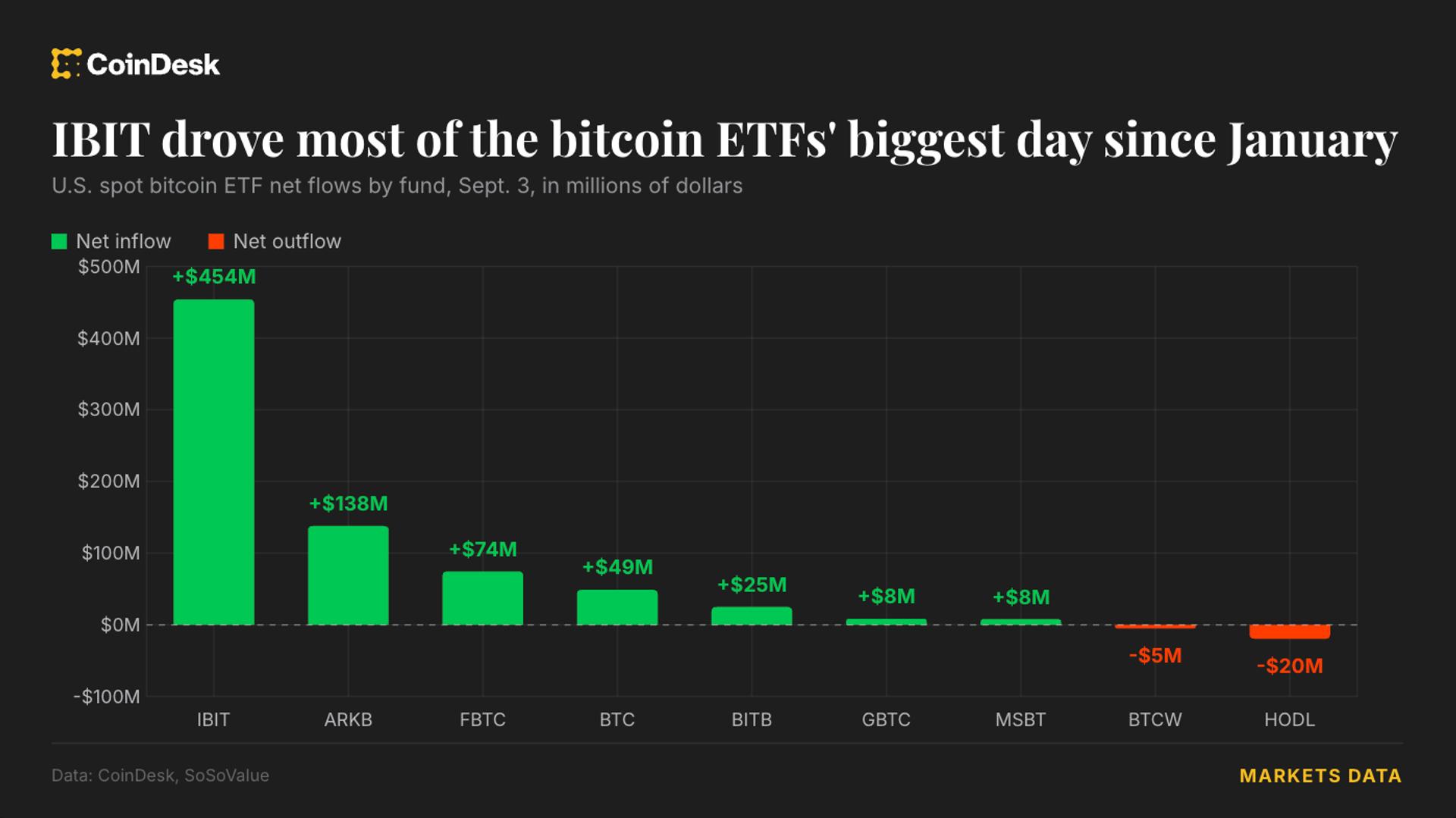
Spot bitcoin ETFs posted their largest single-day inflow since January, with $731M in net inflows and all funds rising ~6%. BlackRock's IBIT accounted for over half the inflows, pushing total complex assets to $103B for the first time. This marks a significant shift in institutional flows and suggests renewed retail or macro appetite for bitcoin exposure via regulated vehicles.

Macro
Investing.com — Economy · 3 weeks ago

Japan 10-yr bond yields cross 3% for first time in 30 years

Japan's 10-year government bond yield crossed the 3% threshold, marking a significant milestone not seen since the early 1990s. This reflects the BoJ's ongoing normalization of monetary policy and rising inflation expectations in Japan, which has historically kept yields suppressed. For traders, this signals continued JPY strength, potential repricing of rate differentials versus the US, and headwinds for yield-starved equity sectors that have benefited from ultra-loose policy.

Macro
ForexLive · 3 weeks ago

Oil Shock Pushes Yields Higher as Bitcoin Resists and Gold Weakens

Renewed geopolitical escalation sent oil higher (Brent $90.49, WTI $85.76) and US 10-year yields to 4.768%—the highest since January 2025. This isn't just a headline risk; the market is now pricing in stagflation: elevated inflation expectations keeping yields elevated while growth stocks face headwinds from higher discount rates. Nasdaq futures are testing critical support at 29,385; a sustained break below would confirm a sell-the-rally bias. Bitcoin showed relative strength above $78,340 despite equity weakness, but needs to clear $79,225–$80,000 for confirmation. Gold weakened despite geopolitical risk because rising yields raised the opportunity cost of holding non-yielding assets.

Macro
ZeroHedge · 3 weeks ago

Key Events This Week: Jobs, JOLTS, Beige Book And ISM

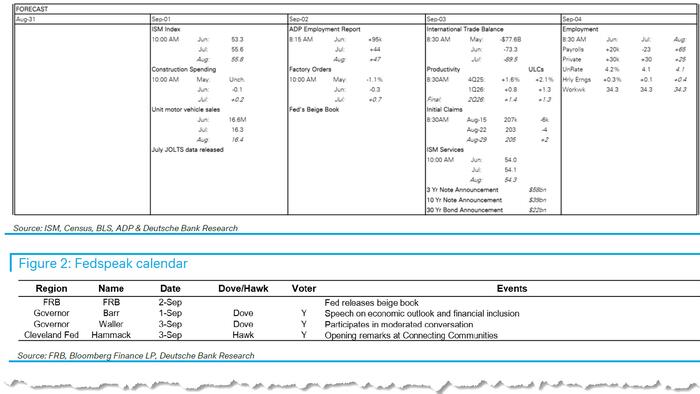
Chair Warsh's hawkish Jackson Hole speech prioritizes inflation over labor-market softness, setting up a September 16 FOMC hike as the baseline expectation despite July's -23k payrolls miss. This week's data docket—JOLTS, ADP, ISM, and Friday's August jobs report—will be interpreted through that hawkish lens; a negative second consecutive print would buck modern precedent for a hike, but Warsh's emphasis on claims data and full employment suggests the Fed may proceed anyway. Average hourly earnings expected to rebound to +0.4%, keeping nominal income growth at ~4.0% YoY, which supports the inflation narrative.

Mean Reversion
ZeroHedge · 3 weeks ago

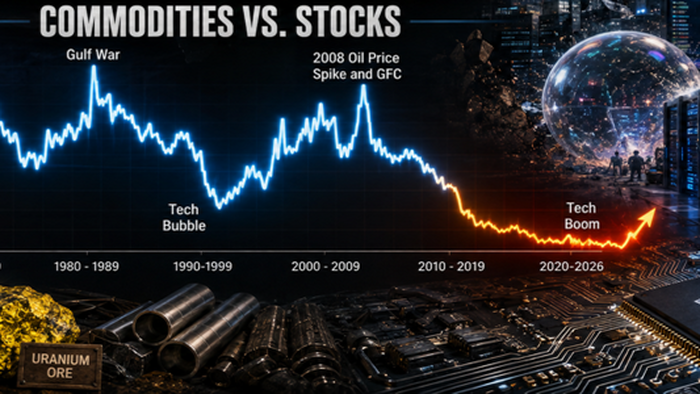
The Mother Of All Mean Reversions: Commodities Have Never Been This Cheap Versus Stocks

Major investment banks (UBS, Barclays, HSBC, JPMorgan, Goldman Sachs) are positioning for a commodity rally, citing physical scarcity across energy, metals, and agricultural markets. The S&P GSCI-to-S&P 500 ratio sits near its lowest point in over five decades—a level seen before the Nifty Fifty and dot-com bubbles, each followed by commodity outperformance. Drivers include AI infrastructure demand, geopolitical fragmentation, China's export controls on critical materials (tungsten, germanium), chronic underinvestment, and a potential secular dollar decline, while retail capital remains heavily concentrated in mega-cap AI stocks.

Commodities
ZeroHedge · 3 weeks ago

Barclays Warns Next Commodity Shock Is Taking Shape: What You Need To Know

Barclays' Craig Rye projects a record-breaking El Niño peaking late 2026–early 2027 will disrupt global agriculture and industrial commodity markets, with palm oil, coconut, and rubber potentially rising 30–40% and copper/aluminum up 20% over 18 months. The thesis builds on a broader consensus—from strategists like Jeff Currie to UBS—that physical scarcity is reemerging across energy, metals, and ag complex, underpinned by declining inventories, mining disruptions, and China's export restrictions on critical materials. The Quantix Commodity Index has already surged 22.5% since late June, signaling broad-based acceleration beyond isolated rallies.

Macro
ZeroHedge · 3 weeks ago

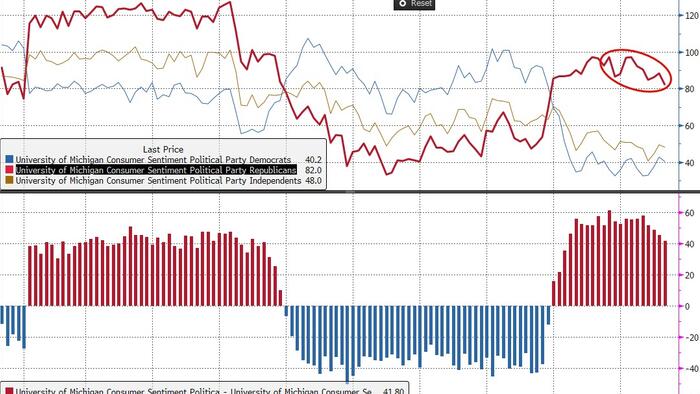
Americans' Confidence Dips In August As Chicago PMI Plunges Into Contraction

The MNI Chicago PMI collapsed to 47.1 in August (vs. expectations of 57.9 and prior 57.6), marking the steepest monthly decline since COVID and signaling manufacturing contraction. Simultaneously, University of Michigan consumer sentiment fell to 51.7, the first decline in three months, driven by worsening economic outlook despite easing year-ahead inflation expectations (4.0%). The divergence is stark: equity markets near record highs while business confidence implodes and consumer confidence deteriorates—a potential warning signal for positioning ahead of economic data that may force a repricing.

Equities
ZeroHedge · 3 weeks ago

PayPal Crashes After Advent, Stripe Abandon $50 Billion Takeover Bid

PayPal shares plunged as much as 16% in premarket trading after a consortium led by Advent International and Stripe abandoned its $50 billion takeover bid. PayPal had reportedly rejected the offer, wagering the buyers would return with a higher price, but instead the group walked away entirely. The stock had rallied roughly 30% since the takeover interest became public in mid-July, so the deal's collapse threatens to erase most of those gains and leaves PayPal trading at 2018 levels despite an ongoing turnaround effort.

Equities
ZeroHedge · 3 weeks ago

Futures Jump After Nvidia's Unprecedented 2028 Guidance Stuns Markets

Nvidia beat Q2 earnings and delivered a striking 70% revenue growth forecast for fiscal 2028, well ahead of consensus (~45%), citing continued strong AI demand tempered only by physical bottlenecks in memory and power—not demand shortage. The guidance sparked a 7.4% premarket surge in NVDA and a 1.1% jump in Nasdaq futures, with broad semiconductor and software strength (Salesforce +10%, CrowdStrike +9%) offsetting weakness in most Mag7 names outside NVDA and Tesla. S&P futures rose 0.5%, but breadth remains narrow; retail flow data show a shift from ETFs to single stocks, concentrated in NVDA and AI-related names, while bond yields edged 1–2bp higher and the dollar held flat ahead of today's macro calendar and Fed speakers.

Crypto
CoinDesk · 3 weeks ago

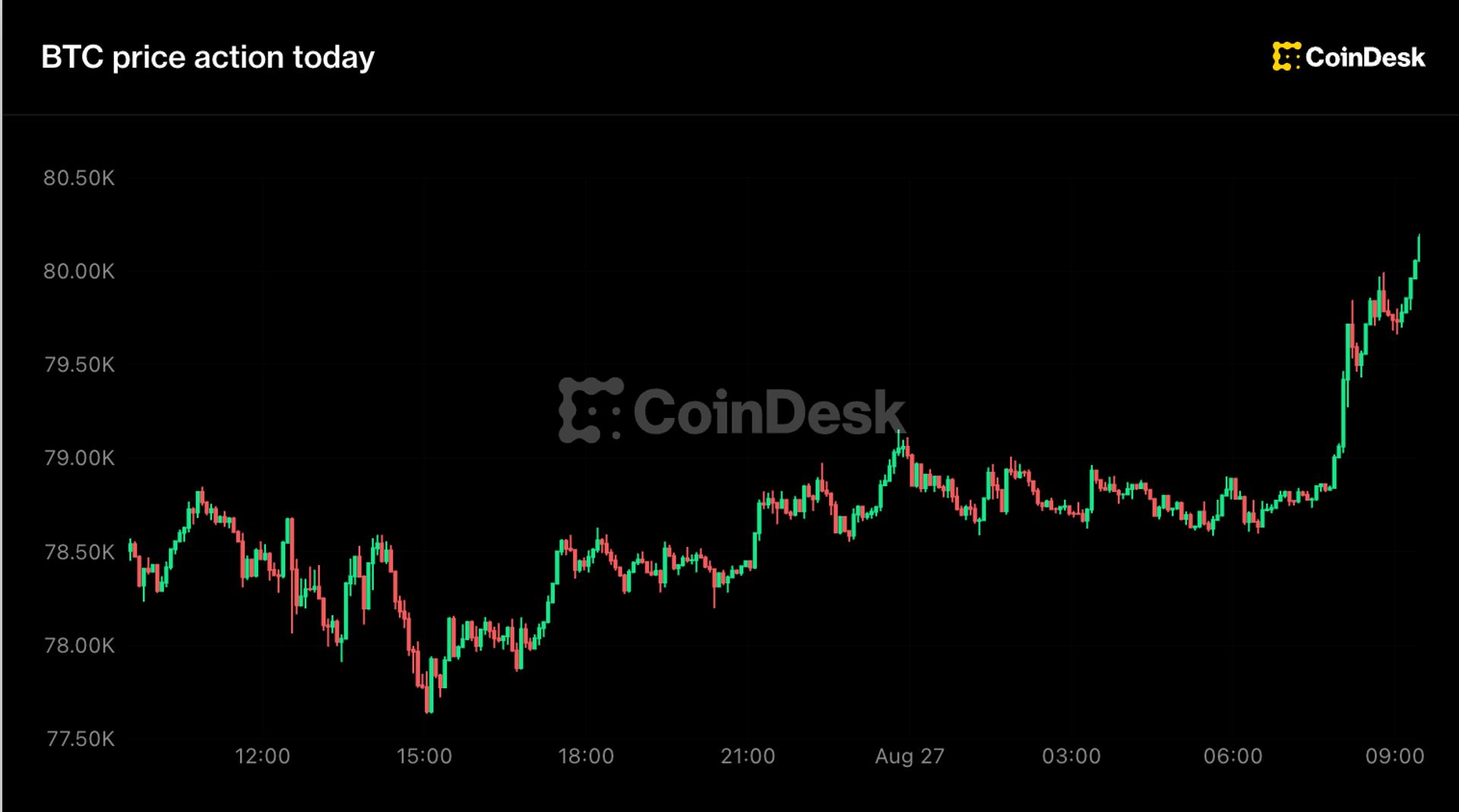
Live updates: Bitcoin tops $80,000 as ETF inflows hit eight straight days

Bitcoin has broken above $80,000 amid a sustained eight-day inflow streak into U.S. spot bitcoin ETFs, which have accumulated $2.8 billion in new capital. Ether ETFs are tracking the same daily inflow pattern, signaling broad institutional appetite for crypto exposure. With three trading sessions remaining in August, the month is positioned to become the strongest since October 2025 if the inflow momentum holds.