Category archive

Liquidity

Order flow, liquidity and ICT concepts

20 stories loaded

Crypto
Cointelegraph · yesterday

Bitcoin price threatens $77.7K support loss with recent buyers underwater

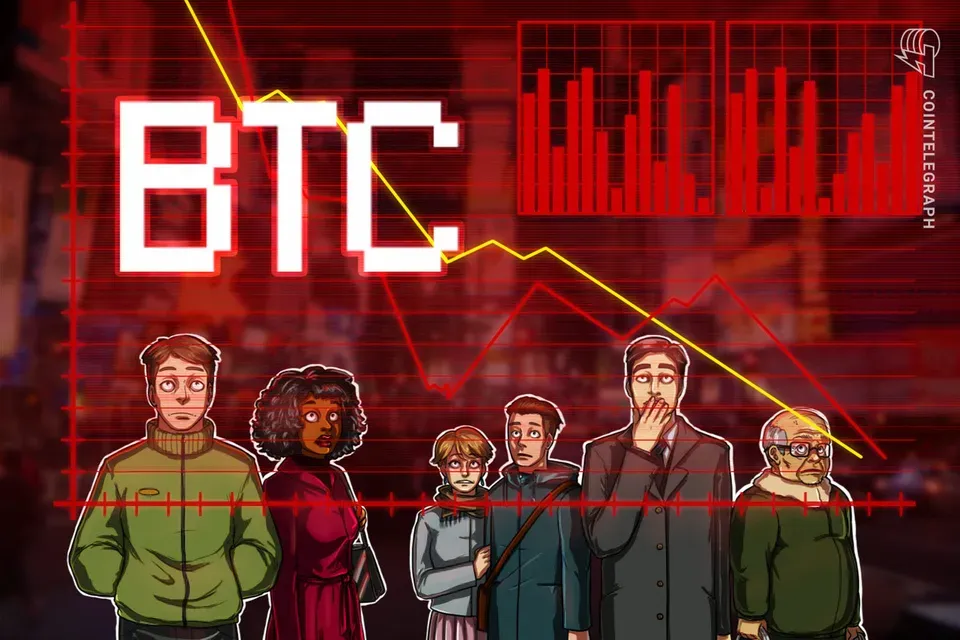
Bitcoin has dropped below $77,700, the cost basis of traders who bought 1–3 months ago, flipping this historical support into potential resistance as underwater traders seek breakeven exits. Onchain data shows the gap between price and realized price has narrowed sharply, with the next support zone at $68,400 (representing a 12% aggregate loss for that cohort). Short-term holders with a $75,832 cost basis are also approaching breakeven, and a further decline to an MVRV ratio of 0.85 would signal "tactical capitulation."


Macro
ZeroHedge · 2 weeks ago

The Next Fannie Mae Is Made Of GPUs

Patrick Feeley argues that private credit funding AI infrastructure faces structural risk: GPUs depreciate 50%+ annually while buildings last 30 years, hyperscalers lease on short 4-year terms with escape clauses, and asset-backed bonds now price near junk spreads (450–550 bps) despite being marketed as senior infrastructure. The author traces Palantir CEO Alex Karp's logic that this liability is too large for private markets to hold, predicting Washington will eventually backstop the system via loan guarantees or conservatorship—much as it did with mortgage credit post-2008—once compute is formally called "critical infrastructure."

Equities
ZeroHedge · 2 weeks ago

Sell The Bailout: Skydance Tumbles As Musk's $1 Billion Check Reminds Everyone Paramount Needs One

Elon Musk invested $1 billion in Skydance (the Paramount-Warner Bros. merger entity), triggering a 7.5% spike that reversed into an 11% intraday plunge and a trading halt for volatility. The move exposed a fundamental disconnect: credit markets had already signaled severe distress via CDS hitting 601bp (Lehman-era levels) and bonds trading at record lows, suggesting the company needed far more capital than Musk's $1B contribution—which covers only ~25% of annual debt service on $87B of total debt. Traders interpreted the "emergency equity" as confirmation of crisis rather than a solution, and John Malone's earlier suggestion of an $8–10B check made the actual $1B investment appear inadequate.

Equities
ZeroHedge · 2 weeks ago

CoreWe've Got Bills To Pay: Bernstein Sees $76 Billion Funding Hole At Imploding Neocloud

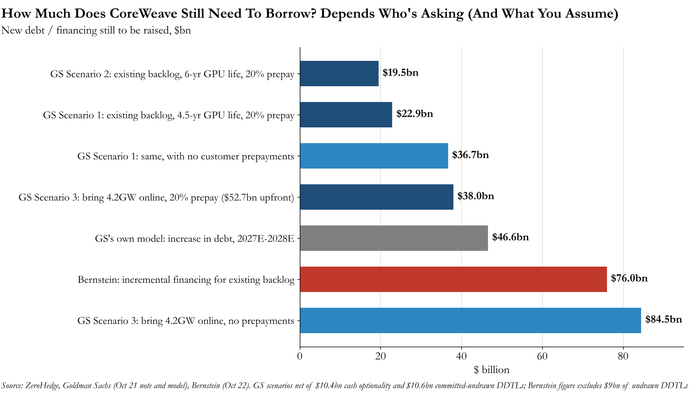
Goldman Sachs upgraded CoreWeave (CRWV) to Buy on Monday with a $106 price target, but the stock immediately reversed gains and has fallen further to $56.70. Bernstein Research published a scathing rebuttal estimating CoreWeave needs $76 billion in fresh capital to deliver existing contracted backlog—more than three times Goldman's $23 billion estimate. Bernstein's analysis reveals structural problems: CoreWeave faces amortizing debt obligations starting now, unsecured borrowing costs at 15%, unlevered returns of only 9% on flagship contracts, and a business model where shorter strategic contracts (needed to compete) actually increase funding costs. Goldman's own financial model contradicts its headline scenario, showing $91 billion in debt by 2028 and interest coverage below 1.0x through 2027.

Macro
ZeroHedge · 2 weeks ago

French Budget Rejections Fuel Debt Crisis Fears As Yield Spread Over Germany Hits 15-Year High

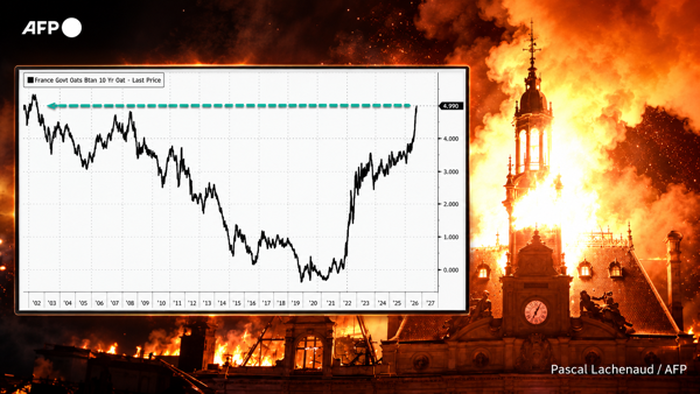
French government bonds sold off sharply as parliamentary rejections of deficit-reduction proposals triggered a widening sovereign risk premium. The 10-year OAT yield climbed to 5.11% (highest since 2002) while the spread over German Bunds expanded to 174 basis points, exceeding expectations that MPs would protest but ultimately approve measures. With EUR 10bn of planned cuts already rejected and the most contentious debates (pension indexation, healthcare) still pending, the bond market is pricing in genuine fiscal consolidation risk and reviving eurozone sovereign debt crisis narratives.

Macro
ZeroHedge · 2 weeks ago

"Everyone Has Blown Up": London Macro Traders Carried-Out As French Carry Trade Implodes (Again)

A crowded three-year carry trade in French government bonds (OATs) financed via repo imploded this month as political turmoil and budget concerns sent yields to 5% (highest since 2002) and OAT-Bund spreads to 160bps. The trade, simple in mechanics but overleveraged, blew up many of the same hedge funds that had already suffered losses in March on identical positions—this time the forced unwind was severe enough to eject roughly 100 rates PMs and traders from London desks. The article flags a structural problem: the marginal bid in European sovereigns had been levered carry players, not real money; as they exit, natural buyers are absent, spreads continue widening, and contagion risk now extends to Italian BTPs.

Macro
ZeroHedge · 2 weeks ago

Situational Unawareness: Banks Ran Out Of Room To Lever Up The AI Trade, So They Made More

Barclays circumvented its own risk limits on Asian hedge fund financing by internally auctioning capital from its rates desk to prime brokerage, allowing continued aggressive lending to clients chasing AI stocks. To ease balance sheet strain, the bank and competitors encouraged hedge funds to increase short positions rather than reduce longs—pushing gross leverage to record highs while net exposure appears tamer. This mirrors the Situational Awareness blowup mechanics: massive gross leverage masked by hedges creates vulnerability if longs and shorts move together, leaving the system more fragile despite appearing less risky on capital reports.

Macro
ZeroHedge · 2 weeks ago

French Bond Yields Explode To 24-Year High As Unrest And Fiscal Crisis Collide

French government bond yields spiked to 5%, their highest since 2002, as social unrest collides with severe fiscal deterioration—the 10-year OAT-Bund spread widened to 160 basis points, levels unseen since the Eurozone debt crisis. With Moody's reviewing France's Aa3 rating this week and public debt at 119% of GDP, foreign investors are reportedly exiting, while Deutsche Bank identifies France as the most vulnerable eurozone economy to sovereign debt stress. The political gridlock ahead of 2027 elections and inability to pass a 2027 budget have left the bond market pricing in acute country-specific risk.

Macro
ForexLive · 2 weeks ago

Only a third of the US data centre pipeline looks credible as AI financing strains build

The AI infrastructure build-out is hitting a financing wall: 47+ large US data centre projects delayed or blocked this year, with analysts estimating only ~33% of the announced pipeline is actually credible. CoreWeave bonds have entered distressed territory (25% stock decline), IPO timelines are slipping (OpenAI, SB Energy, Nscale), and tenants like Anthropic have walk-away clauses if partners miss delivery. The repricing is selective—cash-rich hyperscalers (Microsoft, Alphabet, Meta, Amazon) are buffered, but capital-dependent players (Oracle, SoftBank, Cipher) face severe pressure, with second-order risks hitting Nvidia and Asian chipmakers (TSMC, SK Hynix, Samsung) if orders push out.

Equities
ZeroHedge · 3 weeks ago

Hock Tan Warns AI Investors Are Gambling In A Casino... Whose Chips His Own Credit Is Paying For

Broadcom's Hock Tan publicly criticized AI investors as casino gamblers with unrealistic expectations, while questioning frontier lab profitability and warning that capital constraints—not chip scarcity—will limit AI growth. The remarks triggered a 2.6% drop in SOXX and 4.3% decline in AI memory stocks, despite 60% of S&P rising. The irony: Broadcom itself is arranging ~$145B in chip-financing SPVs for customers like OpenAI and Anthropic while its own 5Y CDS prints record 136bp, signaling credit markets now price AI capex risks that equity holders are still ignoring.

Macro
CNBC — Markets · 3 weeks ago

IMF warns bond yields could see a 'disorderly' spike as debt, inflation risks worsen

The IMF's Global Financial Stability Report flagged deteriorating risks in government bond markets, citing record global debt (near 100% of GDP), competing AI-firm borrowing (now 10% of investment-grade issuance), and concentrated hedge-fund positions in Treasuries (9% share, up from 4% in 2022). A sharp, disorderly yield spike could mark down collateral values, erode asset valuations across risk assets, and potentially trigger a forced unwind of leveraged Treasury trades, particularly if overlapping hedge-fund positions unwind simultaneously.

Commodities
ZeroHedge · last month

Oil Hits Session High After DOE Shows Lowest Midwest Gasoline Stocks On Record

DOE reported a 2.25M barrel distillate draw (vs API's 300K build estimate) and 1.68M barrel gasoline draw, with Midwest gasoline at record lows. Crude inventories rose 922K barrels, but the figure was mostly offset by SPR drawdowns of 785K. Refinery utilization fell 1.5ppt and processing has hit three-week lows, while product scarcity—especially diesel—is driving the session rally.

Macro
ZeroHedge · last month

Iran Says It Received Official US Counter-Proposal On Ending The War

Diplomatic talks between the US and Iran via Qatari mediators show slow progress, with Washington's counter-proposal centered on a seven-day trust-building framework—the main sticking point being implementation sequencing. Simultaneously, Iranian forces struck at least three tankers in the Strait of Hormuz on Tuesday, and unconfirmed reports suggest a Houthi attack on Saudi Aramco's Abqaiq processing facility Wednesday, raising the risk profile for crude disruption. Persian Gulf exports have recently recovered, but sustained flow through October depends on whether diplomatic momentum builds before military escalation—a critical variable for energy prices.

Crypto
CoinDesk · last month

Bitcoin rally shows signs of cooling even as a 'bull score' gauge nears its perfect score

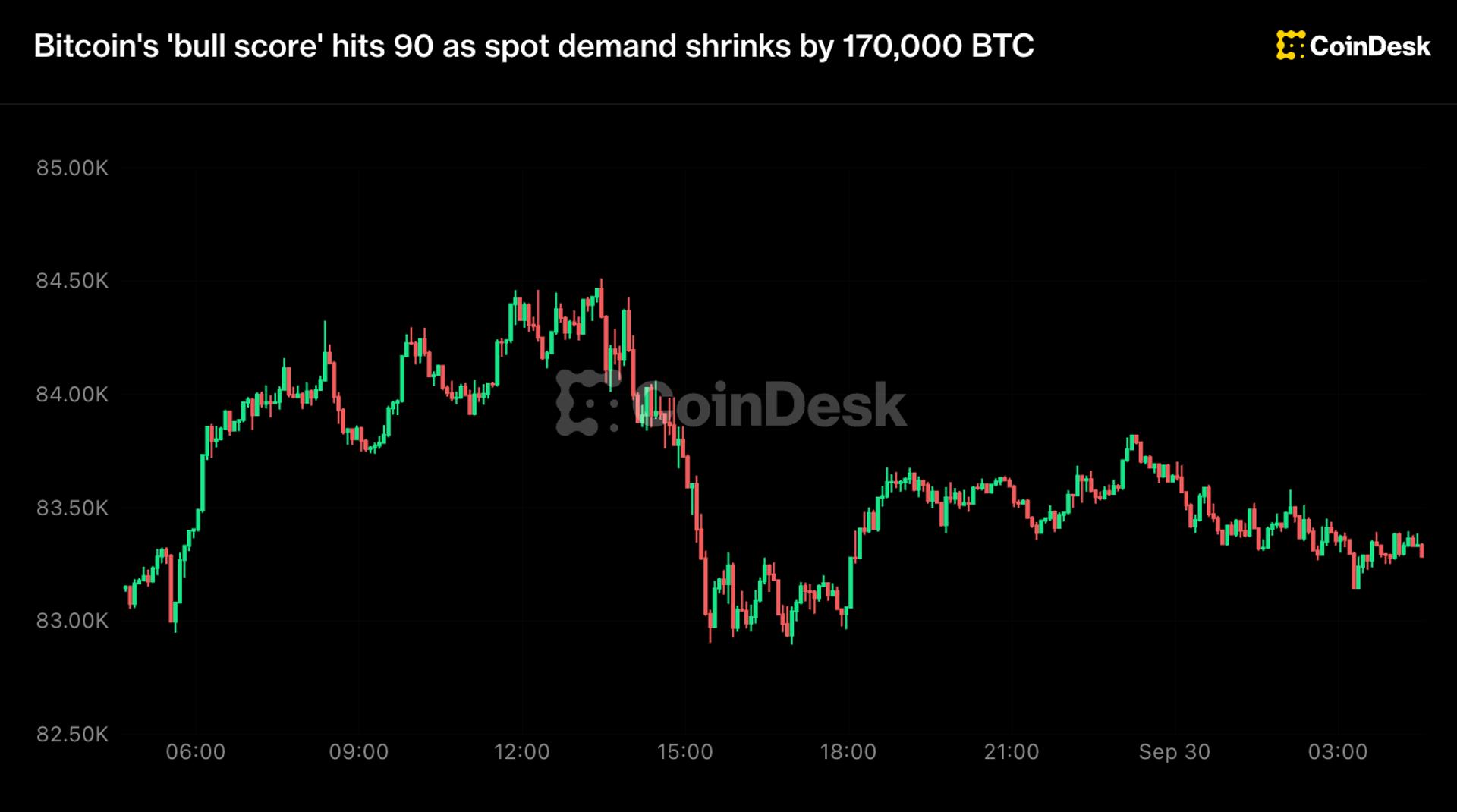
Bitcoin rallied to an eight-month high near $87,400 but has pulled back to $83,300 as on-chain metrics flash divergence warnings. CryptoQuant's Bull Score reached 90/100 after BTC cleared its 365-day moving average, yet underlying demand is deteriorating: spot demand contracted ~170K BTC over 30 days, futures growth collapsed 90% in 15 days (164K to 16K BTC), and recent buyers sitting on 33% unrealized gains are taking profits. Exchange deposits of altcoins hit their highest level since October 2025, suggesting sellers are positioning to dump on any bounce.

Macro
ZeroHedge · last month

Record Plunge In Real-Estate Job Opening Sends JOLTS Sharply Lower, Hints At Ugly Jobs Report

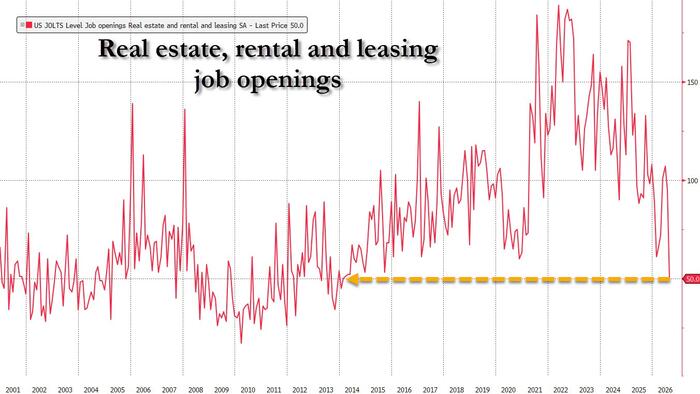
The August JOLTS report printed 7.079 million job openings, missing consensus of 7.228M for the third consecutive month. Most striking was a collapse in real-estate job openings (down nearly 50% to just 50K, the lowest since Feb 2014), while quits fell 23K and the job-openings-to-unemployed ratio compressed to 1.0x from 1.1x. The underlying data suggests Friday's non-farm payrolls report—which officially showed +162K—will likely be revised sharply lower, signaling the labor market is losing momentum after strength in early 2026.

Macro
ZeroHedge · last month

Freddie Mac: Multifamily Delinquency Rate Rises To Multi-Decade High

Freddie Mac reported August multifamily mortgage delinquencies (60+ days) at 0.64%, the highest in over 20 years and exceeding Great Recession peaks, while Fannie Mae's rate held at 0.57%. The surge reflects a broader credit deterioration: one in five renter households missed or paid rent late in 2025, real wage growth turned negative, and refinancing has become prohibitively expensive as 10-year Treasury yields jumped from 4.6% to 5.2% in a month. With Fannie and Freddie originating nearly half of new apartment loans and holding 23% of the multifamily market, this stress signals potential systemic pressure on GSE portfolios and downstream MBS holders.

Forex
ZeroHedge · last month

Yen Jumps As Japan PM Admits Weak Currency "Problematic"

Japanese Finance Minister Katayama confirmed Trump and Japan's deputy PM Takaichi discussed yen weakness, with both sides flagging it as a problem. The remarks triggered a 1% yen rally—the strongest day in two weeks—as traders priced in elevated intervention risk and potential US-Japan policy coordination. BoJ rates are at 31-year highs, but structural yen support hinges on whether jawboning converts into actual coordinated intervention or clearer tightening signals.

Crypto
Investing.com — Stock Market · last month

Bitget says $351.6 million affected in wallet breach, pauses withdrawals

Bitget, a major crypto exchange, disclosed a significant wallet breach impacting $351.6 million in assets and temporarily suspended withdrawals to manage the incident. This represents a substantial security event in crypto markets that will likely pressure exchange tokens, trigger regulatory scrutiny, and affect user confidence in centralized platforms. Traders holding assets on Bitget or considering the venue should monitor developments closely, as breach-induced liquidity freezes can create cascading liquidations and forced position exits.

Commodities
ZeroHedge · last month

NatGas Spikes As Major West Virginia Pipeline Declares Force Majeure

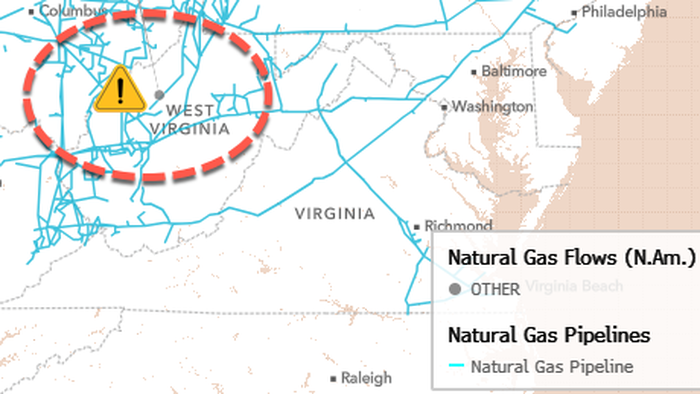
TC Energy's Columbia Gas Transmission issued a force majeure notice on the Mountaineer XPress pipeline in West Virginia due to an unexpected mechanical issue, cutting approximately 1.8 Bcf/d of firm natural gas service effective Sept. 25. The outage affects major supply routes from Appalachian (Marcellus/Utica) production to Northeast, Midwest, and Southeast markets, as well as Gulf Coast export terminals. October NatGas futures rallied 4.5% (13.6 cents) to $3.159/MMBtu on the news, with prices up over 12% since early Wednesday, reflecting supply-route tightness despite abundant production at the wellhead.

Commodities
ZeroHedge · 2 months ago

Diesel Crack Spread Explodes To Record As Russia Weighs Longer Export Ban, US Eyes Its Own

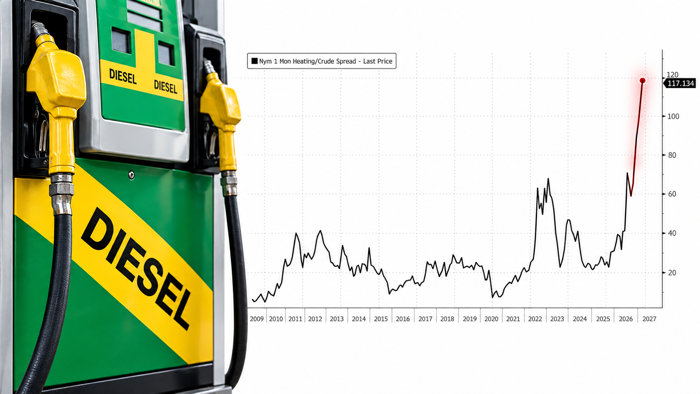
Nymex heating oil (US diesel benchmark) surged 6.1% to a 40-year high, while European gasoil hit record levels, driven by Gulf supply disruptions and Russia's potential extension of its diesel export ban through October. The spike is concentrated in refining spreads rather than crude, signaling a global refining crisis; US policymakers are now discussing a domestic export ban, though analysts warn this would harm the US refining complex without providing meaningful price relief.