
Brent crude futures fell to an intraday low of $86.22 a barrel early Thursday before recovering above $88 by 0630 ET. The benchmark is down 6.
3% this week as traders unwind part of the war-risk premium amid growing optimism that renewed diplomatic efforts involving Iran, Oman and Qatar could reduce the threat of drone attacks on tankers in the critical waterway.Bloomberg reported earlier that Kuwait and Qatar are restoring crude exports through the highly contested maritime chokepoint. Sources familiar with energy flows in the Gulf region say that both producers are shipping about 70% of the combined 2 million barrels a day they exported before the Iran war.
Total oil shipments via tankers have climbed to between 7 million and 8 million barrels a day, up from roughly 4 million barrels a day in mid-July and equal to about 75% of prewar levels, according to the outlet.London-based energy and freight analytics firm Vortexa told clients in a separate report that the estimated seven-day average for oil transiting the Strait of Hormuz has approached 10 million barrels a day.The recovery in the critical waterway helps explain why Brent crude retreated to $86 earlier this morning after surging above $120 in late April.
The Trump administration and Tehran remain deadlocked over finding another resolution, but Gulf exporters are increasingly finding ways around the disruption.The outlet noted that the United Arab Emirates was the first to transit crude through the strait before transferring it to other vessels in the Gulf of Oman.Maritime research firm TankerTrackers was the first to report the increase in ship-to-ship transfers on Tuesday.
A busy day in the Gulf of Oman, where there are at least fifteen sets of STS transfer sessions taking place. We count 25 million barrels of crude oil; plus some refined products. The oil originates from almost every country in the region, minus Iran.
#OOTT #IranWar #Tankers pic.twitter.com/TAba26mJiW — TankerTrackers.
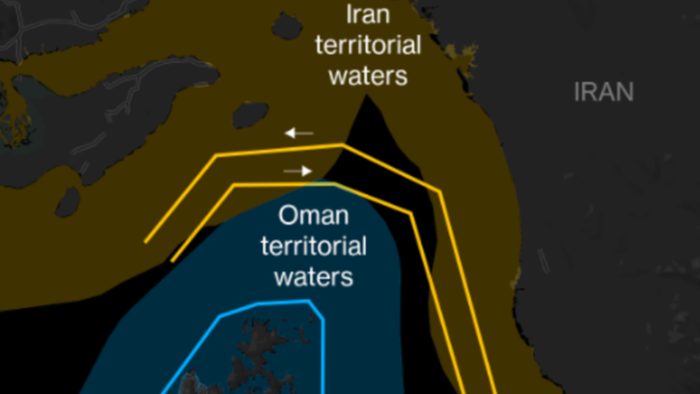
com, Inc. (@TankerTrackers) August 25, 2026"An Iran-Oman framework for a 'temporary joint maritime corridor' is pulling oil lower. It remains difficult to envision how the US would sign off on this given the concurrent ratcheting up of economic pressure," UBS analyst Justinus Steinhorst wrote in a note.
Dennis Kissler, senior vice president for trading at BOK Financial Securities, said on Wednesday, "It seems crude is now beginning to price in a sooner-rather-than-later peace deal."Beyond Iran and Oman's diplomatic push to reopen the strait, Reuters reported that both countries are working to clear all naval mines from the waterway. President Trump said earlier this week that all mines had been removed.
However, with disruptions to Middle Eastern refineries and Ukrainian attacks on Russian refineries, the energy crisis has morphed into a crude-products crisis, with diesel crack spreads in the US still trading above $90 a barrel. Last week, the spread hit an unprecedented $100-a-barrel level as global diesel supplies dwindled.